
Updated: 12-Aug-26 14:40 ET
| July Treasury Budget |
 |
|
| Updated: 12-Aug-26 14:40 ET |

Highlights
- The Treasury Department reported a $432.3 billion deficit for July versus a deficit of $291.1 billion for the same period in July 2025.
- Receipts totaled $334.0 billion, while outlays reached $766.3 billion.
Key Factors
- Individual Income Taxes ($173 billion) was the largest source of receipts in July, followed by Social Insurance & Retirement ($139 billion). Customs duties were -$9.0 billion.
- The largest outlays by function were Medicare ($174 billion), Social Security ($141 billion), Net Interest ($104 billion), and National Defense ($91 billion).
- The fiscal year-to-date deficit is $1.799 trillion versus $1.628 trillion in the same period a year ago.
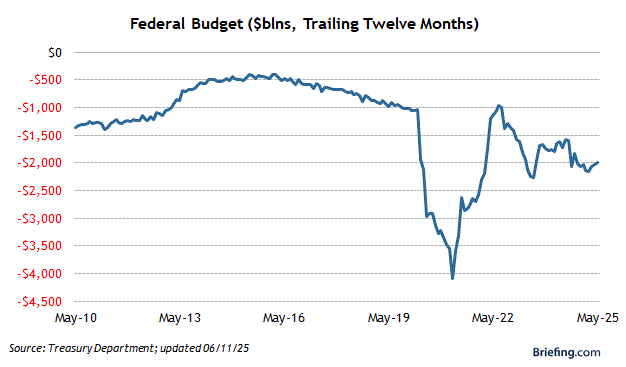
- The budget deficit over the last 12 months is $1.946 trillion versus $1.805 trillion in June.
Big Picture
- The key takeaway from the report is that the net interest outlay exceeded the national defense outlay, which is saying something given that the U.S. is at war with Iran.
| Category | JUL | JUN | MAY | APR | MAR |
| Deficit (-)/Surplus | -$432.3B | -$120.3B | -$292.6B | $215.0B | -$164.1B |
| Deficit (-)/Surplus Fiscal YTD | -$1799.0B | -$1370.0B | -$1250.0B | -$953.0B | -$1168.6B |
| Deficit (-)/Surplus over last 12 months | -$1945.7B | -$1804.5B | -$1657.0B | -$1680.2B | -$1636.9B |